




We create engaging Social Media AR Filters & Effects for TikTok and WebAR, helping brands and businesses connect with their audience in interactive ways. Whether it’s a fun face filter, a branded effect, or a mini-game, our custom AR filters boost engagement and make your content stand out.
Boost interaction with custom AR filters for TikTok & WebAR that encourage users to create and share content featuring your brand.
From face filters to mini-games, we develop unique AR experiences tailored to your audience, making your brand stand out.
Deploy filters where they matter most! Leverage TikTok for viral reach or WebAR for browser-based accessibility, removing the need for an app download.
As part of Sonnentor’s Advent Calendar campaign, we developed a holiday-themed AR filter that allowed users to virtually try on festive Christmas accessories. This interactive effect encouraged engagement and brought holiday spirit to their audience.
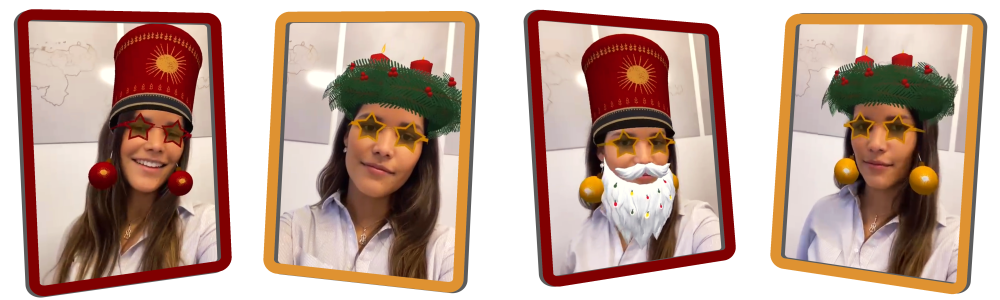
The AR filter was opened over 20,000 times in one month, increasing brand interaction and visibility during the holiday season.
Users could choose between different Christmas-themed accessories, including a nutcracker hat, advent crown, star-shaped sunglasses, and more, making the experience playful and shareable.
This AR filter was one of nine interactive effects in Sonnentor’s Tee Advent Calendar project. Where each tea package featured a QR code leading to exclusive digital content.
The Blind Ranking filter has taken TikTok by storm. This interactive effect challenges users to rank items one by one without knowing what comes next, leading to spontaneous and often hilarious results. The unpredictability makes it highly engaging, driving user interaction and content sharing.
Brands can use this concept creatively, whether ranking products, locations, flavors, or brand-related items, this format encourages organic engagement and increases brand awareness in a fun and interactive way.
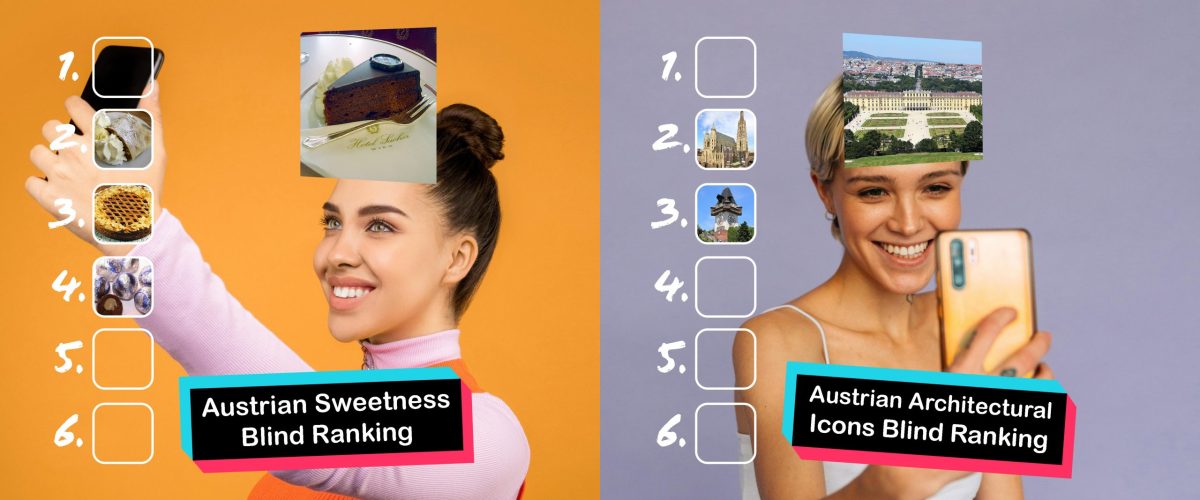
Users love the challenge and unpredictability, making them more likely to create and share content, boosting brand visibility.
Instead of a traditional ad, the filter subtly incorporates branded elements in an interactive and entertaining format.
Whether it’s ranking snack flavors, fashion styles, travel destinations, or tech gadgets, any brand can adapt this viral format to fit its niche.
We create custom AR filters optimized for the platforms that matter most:
Both platforms offer unique opportunities to increase engagement, boost brand visibility, and create shareable interactive experiences.


Creating engaging, interactive AR filters requires a structured approach to ensure the best experience for your audience. So, here’s how the process works:
Everything starts with understanding your vision and defining the best approach. Whether it’s a TikTok Effect or a WebAR filter, we discuss your brand goals, audience, and desired interaction. Based on this, we craft a unique concept that fits your needs.
Once the idea is set, our team creates mockups, wireframes, and early prototypes for testing. This phase is crucial for ensuring the filter is engaging and intuitive before moving into full production.
Then, using TikTok Effect House or WebAR frameworks, we develop the filter with interactive elements, animations, and real-time effects. Throughout this process, we conduct multiple rounds of testing to ensure smooth performance across devices and platforms.
Before launch, we fine-tune the effect based on real-world user testing. Adjustments are made to improve responsiveness, and overall performance to maximize engagement and shareability.
Once the filter is live, we provide support and optimization to track its performance and make adjustments if needed. Whether it’s a viral TikTok effect or a branded WebAR experience, we ensure it runs smoothly and meets your campaign goals.
Can AR filters be developed for Instagram?
No, Instagram no longer allows new AR filters to be created or published. Previously, filters were developed using Meta’s Spark AR. But since Meta discontinued support for public AR filter publishing, brands can no longer launch new effects on Instagram. However, alternatives like TikTok Effects and WebAR Filters provide even better engagement and accessibility.
Why can’t AR filters be developed for Instagram anymore?
Meta has restricted access to Spark AR and no longer allows new filters to be published on Instagram or Facebook. The platform has shifted its focus, making TikTok and WebAR the best current alternatives for branded AR effects.
What’s the best alternative to Instagram Filters?
What is a TikTok Effect, and how can brands use it?
A TikTok Effect is an interactive AR filter that users can apply to their videos. Brands use TikTok Effects to:
– Increase engagement with fun, interactive content.
– Encourage user-generated content (UGC), leading to viral trends.
– Enhance brand awareness through creative challenges and branded effects.
What is WebAR, and how does it work?
WebAR (Web-based Augmented Reality) lets users experience AR effects directly from a web browser—no app download required. By scanning a QR code or clicking a link, users can access an interactive AR experience instantly. This makes WebAR an ideal replacement for Instagram AR filters, offering more accessibility and broader reach.
Should I choose TikTok Effects or WebAR for my AR filter?
It depends on your goals:
– Choose TikTok Effects if your goal is to engage social media audiences, create viral trends, and boost brand visibility on TikTok.
– Choose WebAR if you want a fully branded AR experience that works on any device without an app, making it perfect for marketing campaigns, product activations, and digital experiences.
How long does it take to develop an AR filter?
The development time depends on the complexity of the effect:
– Simple TikTok Effects & WebAR Filters → 2-4 weeks
– More complex filters (mini-games, interactive elements, try-on experiences) → 4-8 weeks
– Advanced AR campaigns with multiple effects → 6+ weeks.
Can AR filters be used for e-commerce?
Yes! Virtual Try-On filters allow users to preview products like glasses, hats, makeup, or jewelry before purchasing. This helps brands:
– Increase conversion rates by giving customers confidence in their purchase.
– Reduce returns since customers can see how a product looks on them before buying.
– Enhance the shopping experience with interactive and fun try-on effects.
Can AR filters be customized for different brands?
Absolutely! Every TikTok Effect and WebAR Filter is fully customizable to match your brand identity, campaign theme, and marketing goals. From logos and colors to interactive branded elements, we create AR filters that align perfectly with your brand.
How do people access WebAR filters?
WebAR filters can be accessed in three simple ways:
– QR Codes → Scan a QR code to instantly open the AR effect.
– Clickable Links → Shareable URLs that direct users to the filter.
– Website Embeds → WebAR filters can be embedded into landing pages, allowing visitors to interact with AR content directly.
How do brands track the performance of TikTok Effects and WebAR Filters?
Performance tracking depends on the platform:
TikTok Effects provide engagement metrics such as:
– Number of times the effect was used.
– Total views and shares.
– User-generated content (UGC) created with the effect.
WebAR Filters offer analytics on:
– How many users accessed the filter.
– User interactions within the AR experience.
– Engagement time and geographical data.
How much does it cost to develop an AR filter?
The cost varies based on complexity and features, here some examples:
– Basic TikTok/WebAR Filter → €1,200 – €5,000
– Interactive Filters (Mini-Games, Try-On, Special Effects) → €5,000 – €10,000
– Advanced AR Campaigns (Multiple Filters, Custom Interactions) → €10,000+
We offer custom quotes based on project requirements to ensure the best value for your investment.
Do AR filters work on all devices?
No, AR filters require a certain level of device performance to run smoothly. Since AR effects use camera processing, 3D rendering, and real-time tracking, they won’t work on all devices.
For the best experience, high-performance smartphones and tablets are recommended. On low-end or older devices, filters may:
– Run slowly with laggy performance.
– Crash unexpectedly due to hardware limitations.
– Not load at all if the device lacks AR capabilities.
As technology evolves, newer devices gain better AR support, while older models lose compatibility over time. For WebAR experiences, browser updates and device improvements also influence performance.
How can I check if my device supports AR filters?
To use TikTok Effects, your phone must support TikTok’s AR features, which are available on most modern iOS and Android devices.
For WebAR, your phone should support WebXR/WebGL, which most recent iPhones (iOS 12+) and Android devices do. However, performance may vary depending on the phone model, browser, and available RAM.
Is there a hosting fee for AR filters?
It depends on the platform:
– TikTok Effects → No hosting fees! Once published on TikTok, the effect is hosted directly on TikTok’s servers, meaning there are no additional costs for maintaining the filter.
– WebAR Filters → Yes, WebAR requires hosting. Since WebAR effects run directly in the browser, they need a server to store and load the experience.
Can I self-host a WebAR filter?
Yes, but it requires technical setup. You’ll need:
– A hosting server (e.g., SiteGround, AWS, DigitalOcean).
– A WebAR-compatible domain with SSL (HTTPS is required for WebAR).
– Proper server configuration to handle WebGL/WebXR assets.
For most businesses, using a professional hosting service is the easiest and most reliable option.
How much does WebAR hosting cost?
Hosting costs depend on the amount of traffic (number of users accessing the filter).
The cheapest hosting options, such as SiteGround, start at around €20 per month (billed yearly).
Higher traffic may require premium hosting (e.g., AWS, DigitalOcean, or a dedicated WebAR hosting provider), where costs increase based on usage.
If an AR campaign expects thousands or millions of users, a scalable hosting solution is recommended to prevent crashes or slow loading times.
Augmented Reality Try-On filters allow users to see how products look on them before making a purchase. Whether trying on glasses, hats, jewelry, or cosmetics, this interactive experience enhances customer confidence and makes shopping more engaging. Available for both TikTok and WebAR, this technology helps brands showcase products in a way that is immersive, fun, and highly shareable.
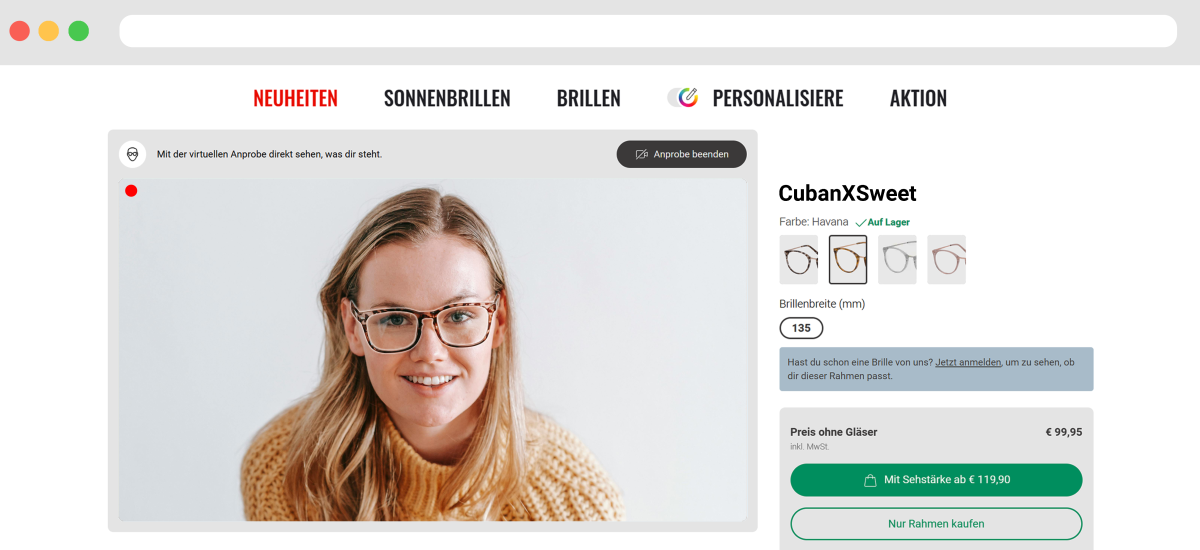
Customers can visualize how a product looks on them, reducing uncertainty and increasing conversion rates.
Try-on filters can be launched on TikTok for viral reach or WebAR for direct accessibility, allowing users to engage instantly via a browser.
From glasses and hats to jewelry and cosmetics, brands can let customers explore different styles with real-time virtual try-on, making the experience interactive and engaging.